
Connecting Packaging Machines, Conveyors and Palletizers: An Integration Checklist
Assign mechanical, controls and fault-recovery interfaces between packaging machines, conveyors and palletizers before approving the line design.
A packaging line needs an agreed handoff at every machine boundary. Matching nominal speeds does not establish matching product pitch, transfer geometry, recipes or fault behavior. Write one interface record for each adjacent pair and give each requirement an owner.
The checklist below is a procurement and design-review aid. It does not replace electrical drawings, risk assessment or a validated safety design.
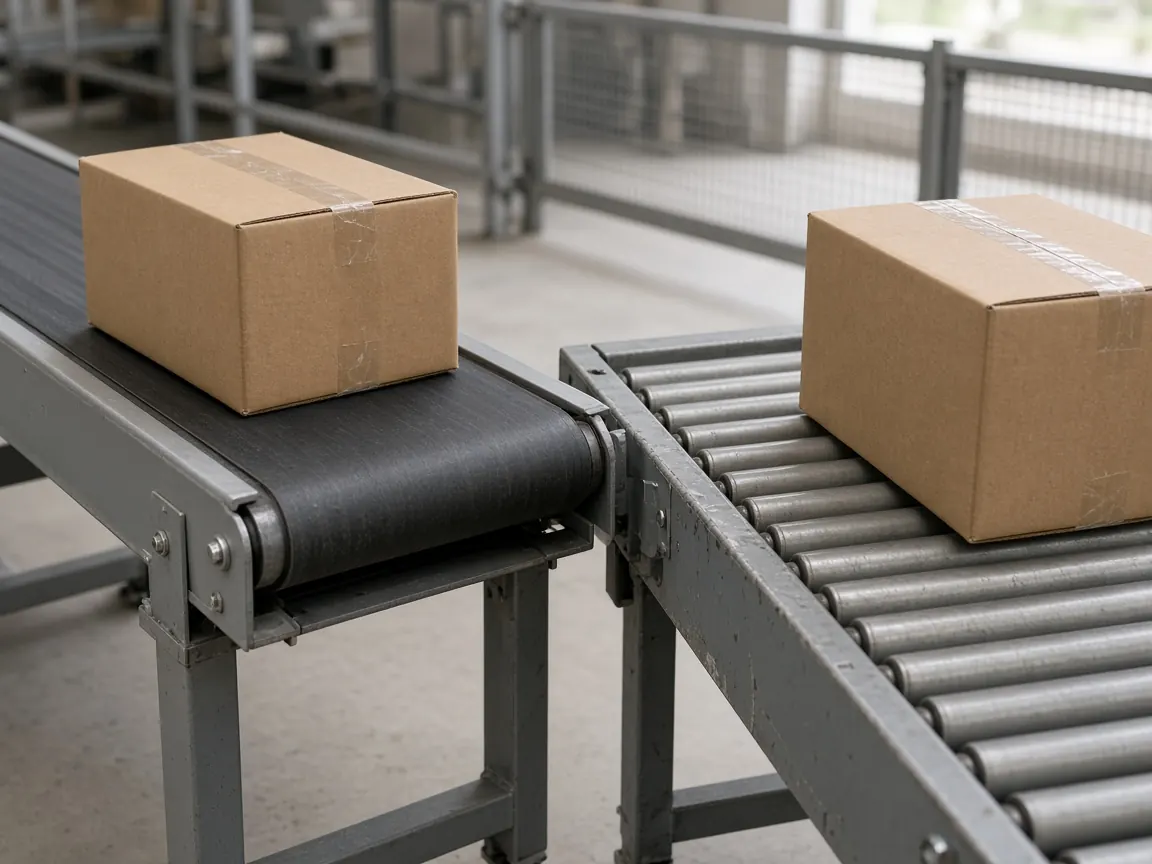
Illustrative photograph. Review each boundary separately; safety functions require their own engineering.
Give every handoff a physical definition
| Interface field | What to record | Evidence to request |
|---|---|---|
| Product envelope | Minimum and maximum dimensions, mass, base condition, orientation | Sample IDs, drawings and agreed tolerances |
| Transfer | Conveyor height, travel direction, gap, pitch and support | Dimensioned interface drawing; difficult-format trial |
| Arrival pattern | Normal flow, batches, gaps and maximum queue | Timing description and observed trial sequence |
| Inspection boundary | Who detects, identifies and removes a rejected item | Reject path and detection test |
| Access | Operator replenishment, maintenance and rejected-pack removal | Layout review with the responsible personnel |
| Utilities | Connection point, required supply and isolation ownership | Supplier utility schedule and installation scope |
Record the handoff height from a common datum. Agree which supplier can adjust it, where the mechanical ownership changes and who approves the final drawing. A conveyor added late can move the boundary without resolving its controls.
Define signals by behavior
A signal called “ready” is ambiguous until both parties describe what it permits. Use a signal schedule with direction, data type, normal state, validity, timeout behavior and reset conditions. Include recipe identity, product permission, downstream availability, blocked or starved state, accepted count and fault information where the application requires them.
PackML’s machine-state model provides a common way to describe machine operation. Ask which states, modes and tags each supplier implements and how those map to the line controller. The presence of a PackML label does not establish that two implementations exchange the same information. Ordinary production-status messaging is not a substitute for the separately engineered safety functions.
Walk through abnormal sequences before software acceptance
| Event to discuss | Required decision | Owner to name |
|---|---|---|
| Downstream stops accepting packs | Where upstream stops; available queue space | Line controls and conveyor suppliers |
| One pack is rejected | How grouping and counts recover | Inspection and downstream machine suppliers |
| Recipe changes with packs still in transit | How the old and new batches are separated | Line controls and production |
| Communication is lost | Permitted equipment state and recovery conditions | Controls integrator |
| Power returns or a fault clears | Who authorizes restart; treatment of work in progress | Integrator with site operations |
These are test scenarios, not instructions to bypass an interlock or force a restart. The project safety assessment determines the protective measures and restart design.
Assign system responsibility beyond a catalog line
LINEVO describes flow-wrapping and cartoning integration for bars, while withholding reviewed technical ratings for that configuration. Treat it as a published process example. Obtain the project drawing, included-machine list and tested interface schedule before extending that description to a complete end-of-line system.
Appoint one party to close interface issues across vendors. Keep an open-item log with the boundary, missing information, responsible party and acceptance evidence. Do not leave “by others” without identifying the other supplier and the exact deliverable.
Bring the record into acceptance testing
Send the layout, product samples, operating sequence, signal schedule, fault scenarios and supplier-responsibility table with the RFQ inputs. Reuse the same records in the FAT and SAT plan so that unresolved handoffs remain visible. The end-of-line process guide establishes which boundaries your project needs, and the packaging topic page links the equipment-specific decisions.
Sources and scope
Source dates refer to the material consulted, not independent performance verification.
- OPC Foundation: PackML overview
PackML machine state and interface concepts; not a project safety specification.
online specification, checked 2026-10-06 · Checked October 6, 2026 - LINEVO industrial bar packaging and cartoning line
Manufacturer lists flow-wrapping and cartoning integration; reviewed technical ratings are not published.
catalog-2026-09-26-full · Checked October 6, 2026
Published by DeltaSpark. Editorial policy · Corrections and contact
Continue reading
End-of-Line Packaging Automation: A Guide to Planning the Process
Define the packaging sequence, accepted outputs, buffers and supply boundaries before requesting an end-of-line automation proposal.
Read article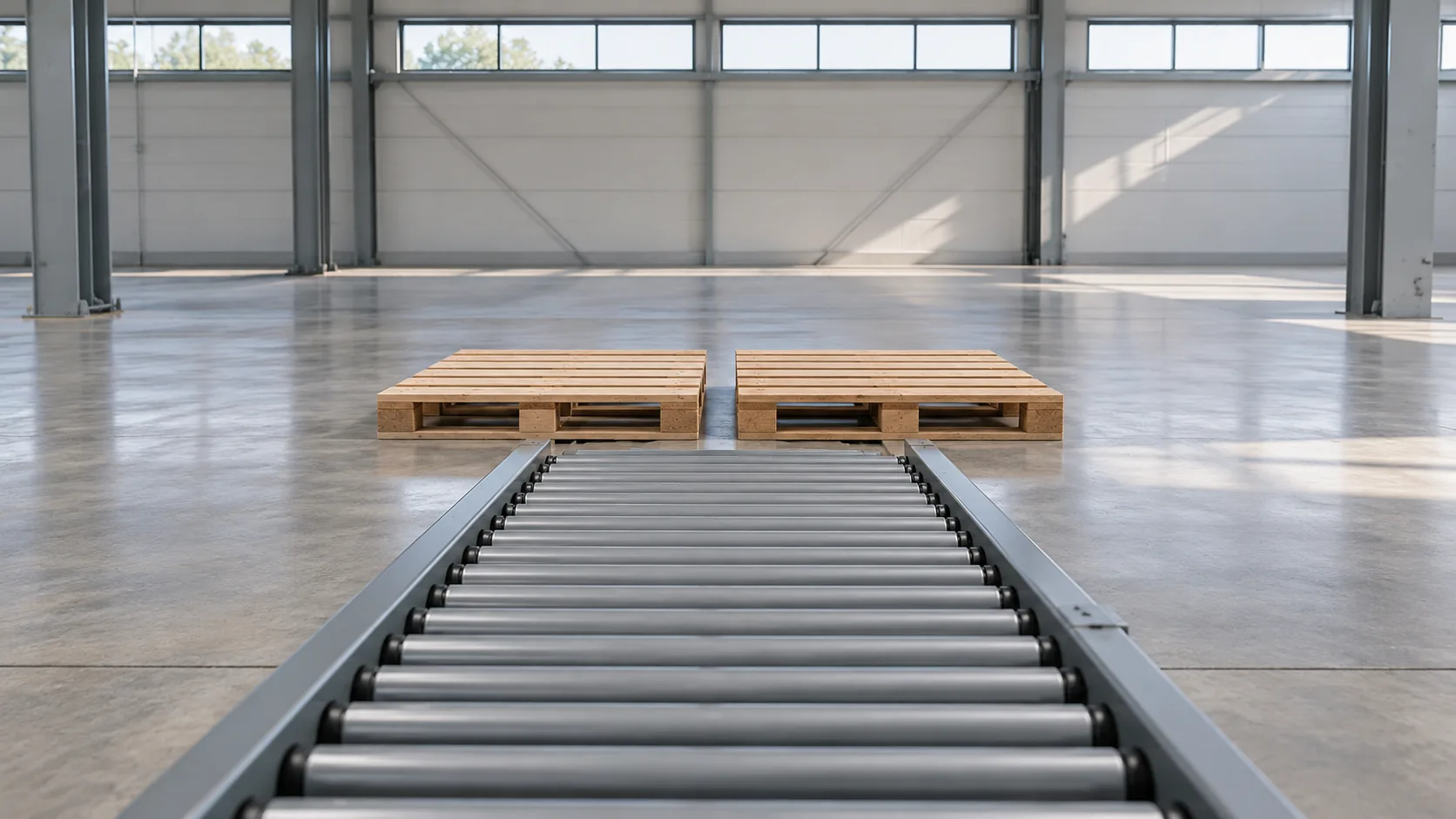
Palletizing infeed layout
Two illustrative lines at 12 cases a minute present 24. A published dispenser floor of 2 pallets a minute is 30 seconds. A late empty pallet stops the infeed.
Read articleDelta Robots at the Case Packer Infeed: How Cermex RoboSELEX Collates Without Accumulation
Examine Sidel Cermex RoboSELEX bottle collation, its published configuration limits, conditional puck removal and the changeover questions buyers must resolve.
Read article