
Case Packing vs. Cartoning: What Each Process Does
Distinguish retail cartoning from shipping-case packing, specify the packaging layers and prepare samples that make machinery quotes comparable.
Cartoning loads a product or group into a carton, commonly a folding retail carton. Case packing groups products or cartons into a shipping case. The useful distinction is the packaging layer and loading task, because suppliers sometimes call either container a “box” or “carton.”
Specify what goes in, what comes out and how it closes. A machine name alone does not resolve the scope.
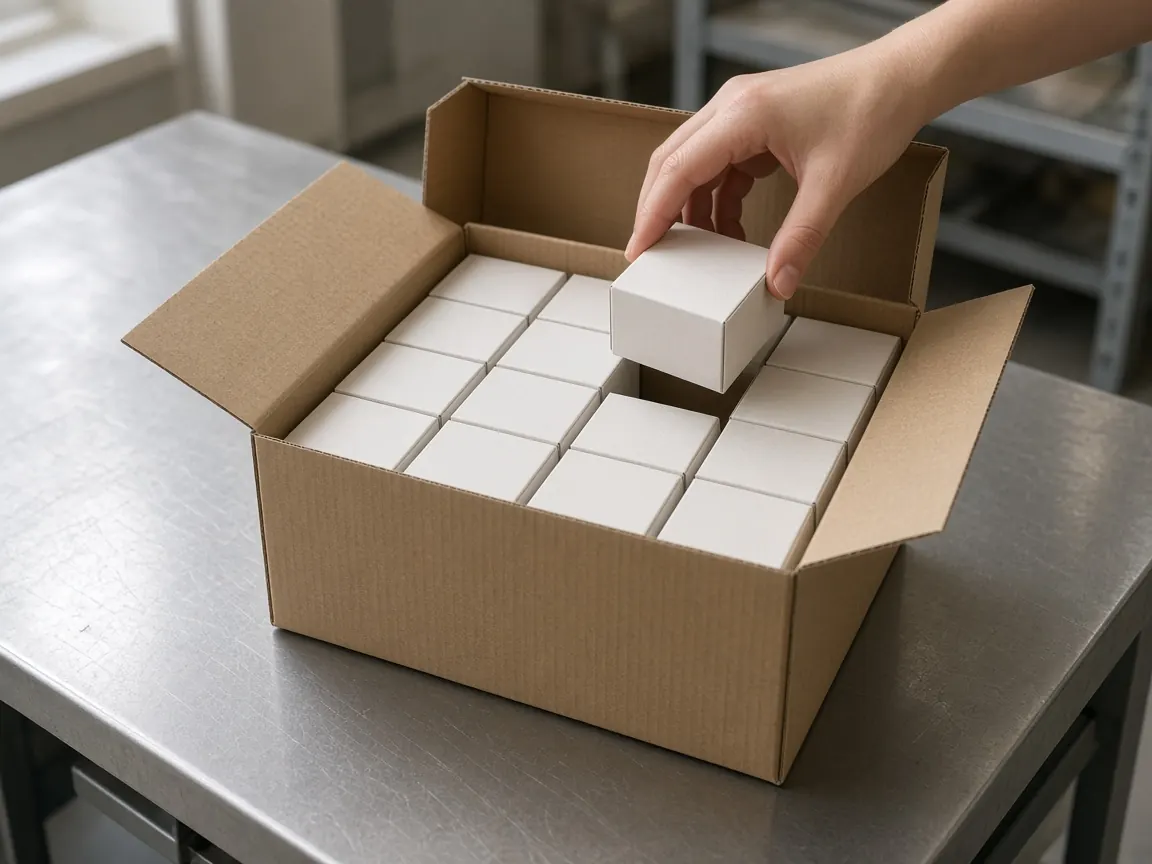
Illustrative photograph. Package names alone do not establish the machine scope.
Compare the finished packs
| Question | Cartoning requirement | Case-packing requirement |
|---|---|---|
| What arrives? | Items, pouches, blisters or a prepared product group | Products or finished cartons in the required case grouping |
| What container is supplied? | A carton blank or preformed carton, as the selected design requires | A shipping-case blank, erected case or wraparound blank |
| What must loading preserve? | Product presentation, leaflet position and carton fit | Case count, orientation, layer arrangement and any dividers |
| What finishes the operation? | Specified tuck closure or adhesive closure | Specified case closure, which may be a separate machine |
| What sample is needed? | Product and production-quality carton blank | Loaded-case pattern, case blank and each product format |
This table defines procurement questions, not a rule that every machine handles all listed formats. Top loading, end loading and wraparound forming need different pack and machine arrangements. Have the supplier state which format it is proposing.
Use a packaging bill of materials
An assumed example makes the distinction concrete: one pouch goes into a retail carton; twelve retail cartons go into a shipping case. The cartoner’s task ends at one finished retail carton. The case packer’s task is the twelve-carton group and its shipping container. Those counts are illustrative, not LINEVO product specifications.
Give each level its own drawing, material specification, dimensions and item count. Record internal and external dimensions separately. An outer box measurement cannot establish the available loading clearance. Include dividers, leaflets and inserts in the pack specification rather than treating them as later accessories.
What the published LINEVO example establishes
The LINEVO coffee-capsule cartoning page is an example of a cartoning application. Its existence does not establish that a complete shipping-case packing station is included. LINEVO’s cartoning family explanation describes carton opening, loading and closure, with the configuration selected around the product and carton.
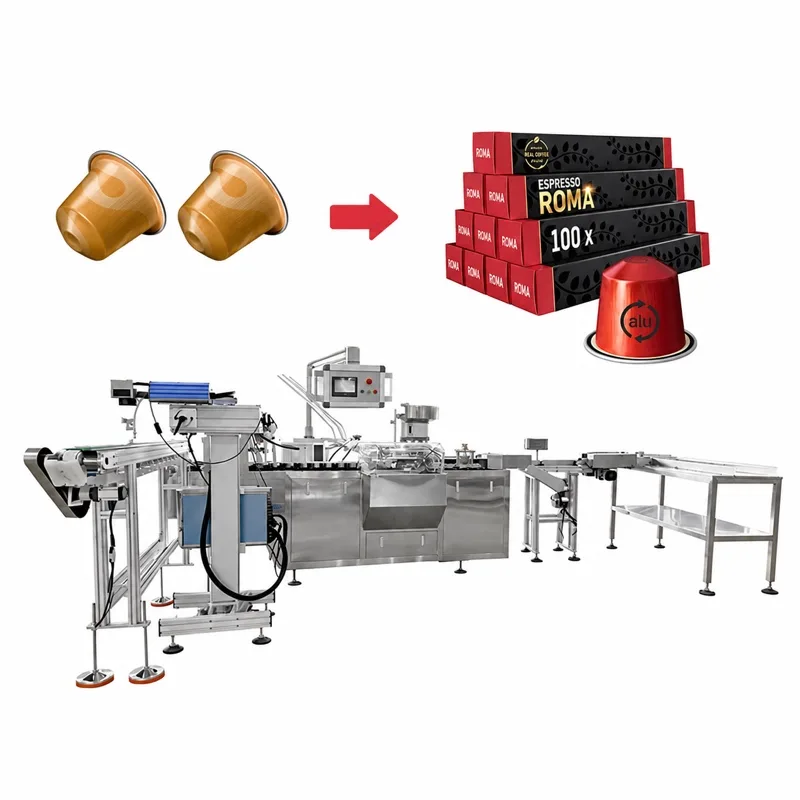
Authorized LINEVO catalog composite, reproduced from the product page. Packaging shown illustrates the application; it is not evidence of a customer installation or independent performance testing.
Ask for a quoted configuration drawing and a sample-pack trial. A catalog image does not establish the actual feeder, carton dimensions, output or closure method supplied for your product.
Prevent gaps between the two machines
Confirm who counts and groups the retail cartons, changes their orientation, supplies empty cases and handles an incomplete group. If the cartoner rejects one carton, the case packer must still receive the correct case count. Test that event rather than assuming two independently running machines will remain synchronized.
Prepare one complete sample set for each packaging level, the units-per-carton and cartons-per-case counts, closure drawings and the required good-output rate. Use those inputs in the line integration checklist and the end-of-line process plan. The packaging topic page groups the next decisions.
Sources and scope
Source dates refer to the material consulted, not independent performance verification.
- LINEVO automatic cartoning machines
Carton opening, loading, closure and configuration boundaries.
undated; live page checked · Checked October 6, 2026 - LINEVO coffee capsule cartoning configuration
A published cartoning application and authorized catalog image; not an independent test.
catalog-2026-09-26-full · Checked October 6, 2026
Published by DeltaSpark. Editorial policy · Corrections and contact
Continue reading
Connecting Packaging Machines, Conveyors and Palletizers: An Integration Checklist
Assign mechanical, controls and fault-recovery interfaces between packaging machines, conveyors and palletizers before approving the line design.
Read articleEnd-of-Line Packaging Automation: A Guide to Planning the Process
Define the packaging sequence, accepted outputs, buffers and supply boundaries before requesting an end-of-line automation proposal.
Read article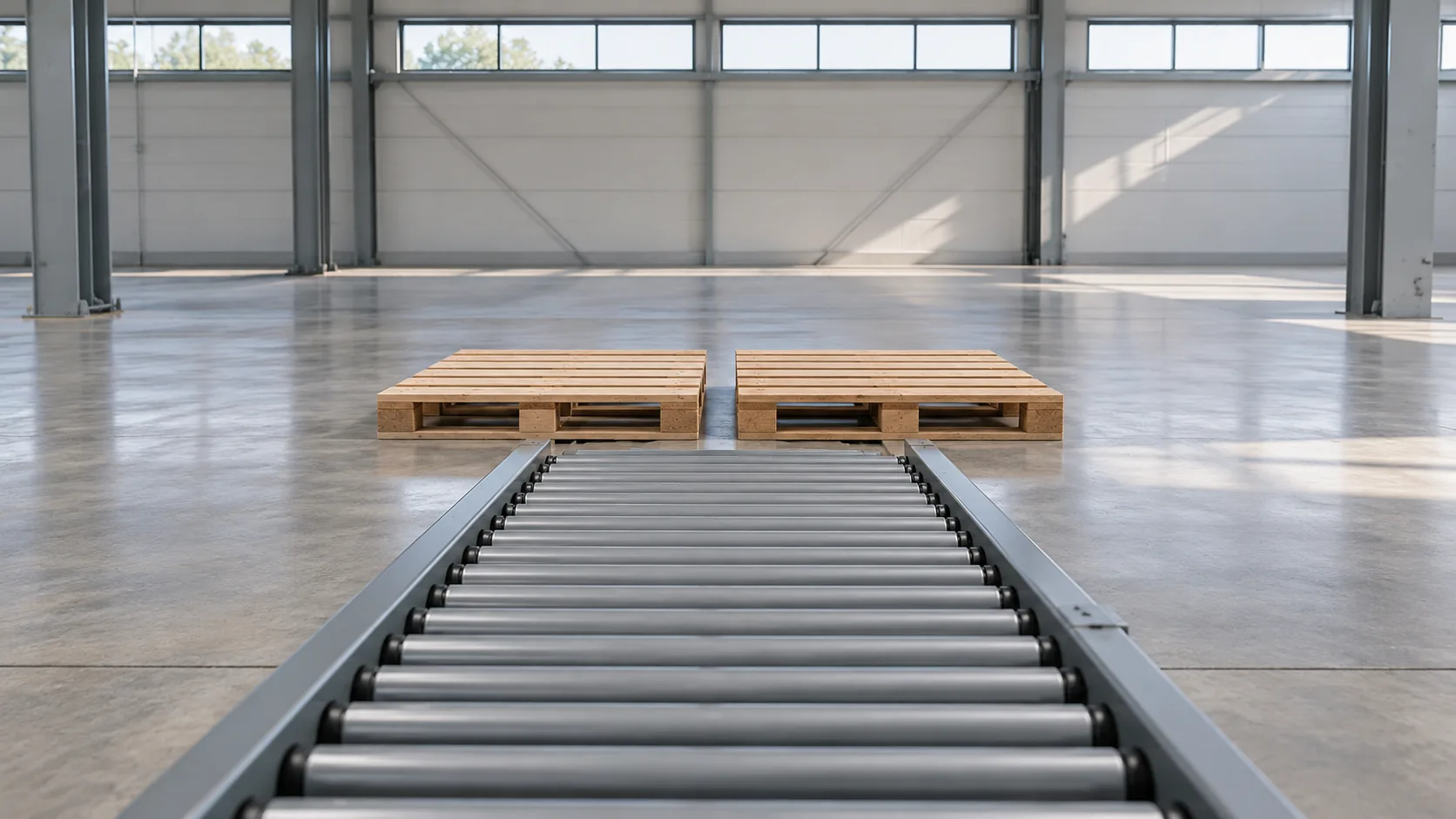
Palletizing infeed layout
Two illustrative lines at 12 cases a minute present 24. A published dispenser floor of 2 pallets a minute is 30 seconds. A late empty pallet stops the infeed.
Read article