
Tape vs. Hot-Melt Case Sealing: A Selection Checklist
Compare tape and hot-melt case closure using board, environment, consumables, changeover and sample-test requirements rather than generic rankings.
Choose a case-sealing method by testing the actual board, flap geometry and distribution conditions. Tape applies an adhesive-backed strip across the joint; hot-melt sealing dispenses adhesive between surfaces that must meet and remain positioned while the bond forms. Neither method has a universal advantage across all case designs.
This comparison concerns shipping-case closure. “Hot-melt tape” can describe the adhesive chemistry on a tape roll; it is not the same equipment process as dispensing molten adhesive onto case flaps.
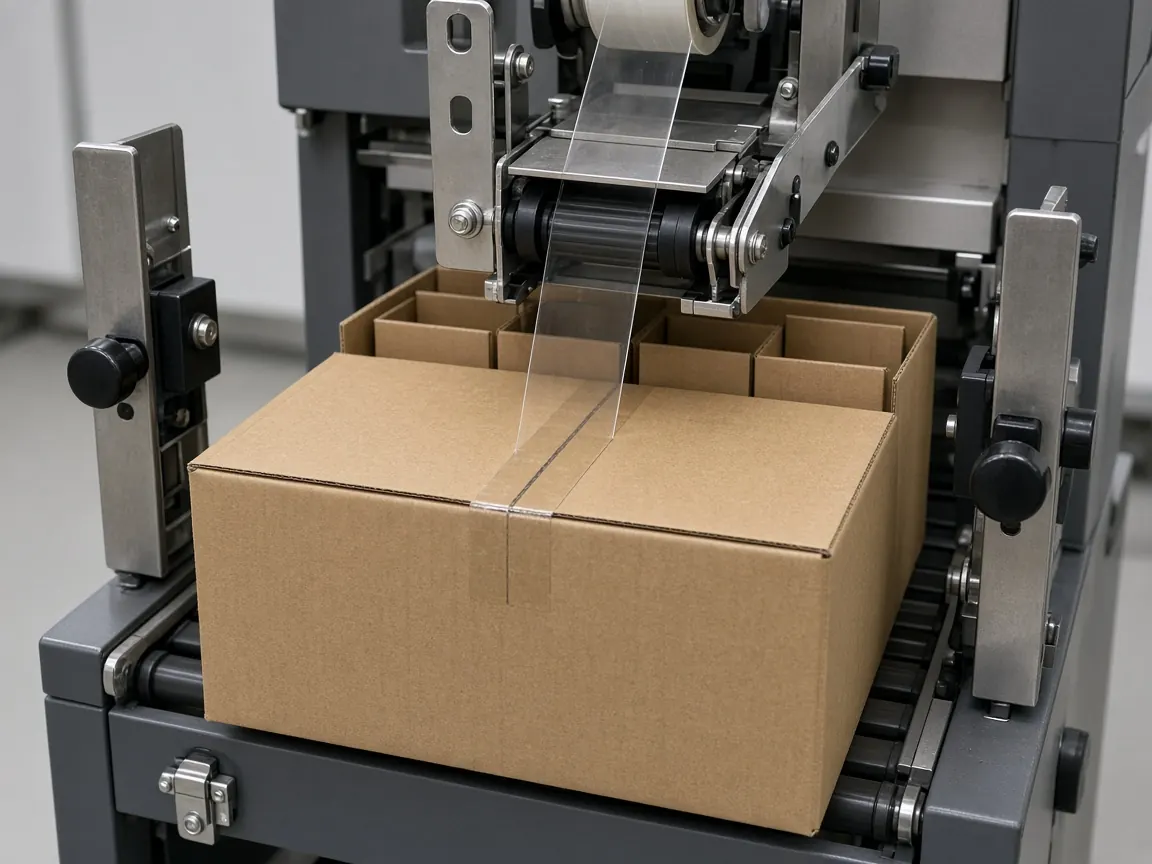
Illustrative photograph. Tape and dispensed hot melt require their own consumable and equipment instructions.
Compare the complete closure process
| Selection input | Tape questions | Dispensed hot-melt questions |
|---|---|---|
| Board surface | Will the chosen tape bond to this printed, coated or recycled liner? | Will the chosen adhesive wet and bond to this board and coating? |
| Flap geometry | Can the applicator place and press the strip across the intended joint? | Can the applicator reach the bond area and the machine hold the flaps in position? |
| Operating environment | What are the tape’s application and storage limits? | What are the adhesive’s application conditions and expected service environment? |
| Format changes | Which guides, tape heads or recipe settings change? | Which guides, adhesive pattern and compression arrangements change? |
| Replenishment | How are roll changes, end-of-roll detection and stoppages handled? | How are adhesive replenishment, readiness and supply faults handled? |
| Maintenance planning | Which wear parts and cleaning tasks does the manual identify? | Which heated-system service tasks and replacement parts does the manual identify? |
The table is an editorial request list. Obtain the selected consumable’s current data sheet and the machine manufacturer’s instructions before setting application conditions.
Separate application conditions from shipping conditions
A carton sealed in a warm packing room and stored in a cold warehouse presents two different conditions. Ask the supplier to distinguish the temperature and surface condition when the bond is made from the conditions after sealing. Include moisture, dust, coatings and the time before the case enters storage in the trial brief.
For example, 3M’s instructions for one box-sealing tape specify a clean, dry, dust-free fibreboard surface. That is evidence that preparation matters for that product, not a transferable performance rating for every tape. Nordson’s case and carton sealing overview describes hot-melt dispensing as a closure application; the project must still establish adhesive compatibility and machine settings.
Request a trial that can reject either option
Supply filled cases, not just flat blanks. Include the formats with the greatest flap spring-back, the smallest usable bonding area and the actual surface treatment. Ask the supplier to record consumable identity, application conditions, closure settings and observations after the agreed storage and handling sequence.
Define failure before the trial: flap opening, tape lift, displaced closure, unacceptable damage on opening or another measurable condition relevant to the shipment. The trial protocol and acceptance limit belong to your packaging specification. A successful demonstration on unrelated board is insufficient.
Compare recurring work as well as material cost
Request consumable usage per accepted case, replenishment labor, planned maintenance items, changeover time and the agreed reject accounting. Do not compare a tape-roll price with an adhesive-container price. Both need to be converted using the actual closure pattern and accepted output, with waste identified separately. No market-price or payback claim is made here.
Prepare the case drawing, board and coating description, filled weight, pack-room and distribution conditions, SKU mix and closure acceptance criteria. Add the sealer’s upstream and downstream handoffs to the integration record and review the remaining end-of-line packaging decisions.
Sources and scope
Source dates refer to the material consulted, not independent performance verification.
- 3M: Scotch Box Sealing Tape 6893
Example of manufacturer instructions requiring a clean, dry, dust-free fibreboard surface; not a universal tape rating.
undated · Checked October 6, 2026 - Nordson: Case and carton sealing
Hot-melt adhesive dispensing for case and carton closure. No equipment specifications reused.
undated · Checked October 6, 2026
Published by DeltaSpark. Editorial policy · Corrections and contact
Continue reading
Connecting Packaging Machines, Conveyors and Palletizers: An Integration Checklist
Assign mechanical, controls and fault-recovery interfaces between packaging machines, conveyors and palletizers before approving the line design.
Read article
Palletizing infeed layout
Two illustrative lines at 12 cases a minute present 24. A published dispenser floor of 2 pallets a minute is 30 seconds. A late empty pallet stops the infeed.
Read articleDelta Robots at the Case Packer Infeed: How Cermex RoboSELEX Collates Without Accumulation
Examine Sidel Cermex RoboSELEX bottle collation, its published configuration limits, conditional puck removal and the changeover questions buyers must resolve.
Read article