
Maintenance Planning for a Robotic Palletizing Cell
Plan palletizing-cell maintenance with an asset register, model-specific documents, spares, support ownership and handover records before production starts.
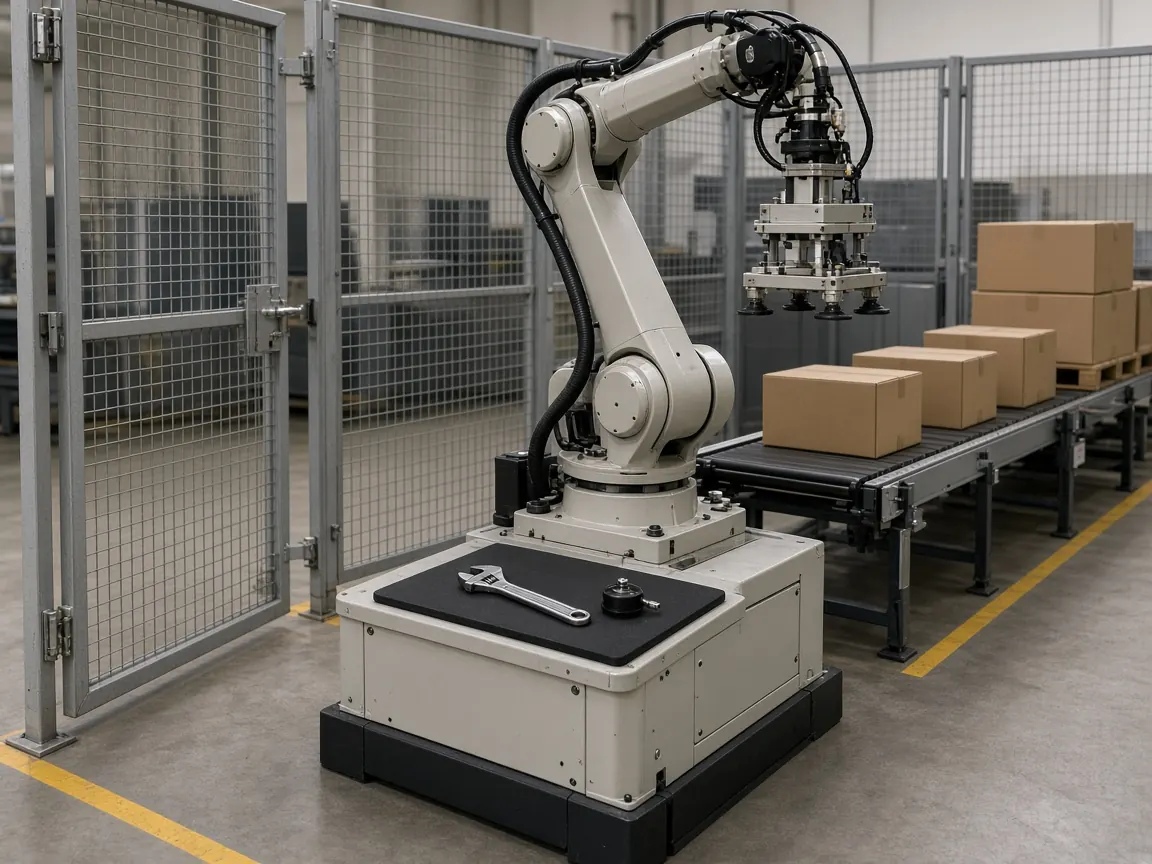
Plan maintenance around the complete palletizing cell and the people who will support it. The robot, gripper, conveyors, pallet-handling equipment and controls can have different manufacturers, documents and service responsibilities. Build a register that connects each asset to its instructions, parts and owner before handover.
This guide helps a buyer or maintenance manager prepare that register. It does not provide a lubrication schedule, isolation sequence, inspection limit or repair procedure for a particular machine.
Identify what your team will own
| Asset or system | Records to request | Responsibility to confirm |
|---|---|---|
| Robot and controller | Exact model and serial number, installed options, manuals and service requirements | Who performs routine and specialist work; escalation contact |
| Gripper and tooling | Tool drawing, component list, wear-item references and permitted pack range | Who owns tooling changes, replacement parts and product trials |
| Conveyors and pallet equipment | Supplier details, drawings, drive/component references and equipment instructions | Boundary between cell supplier, conveyor supplier and site maintenance |
| Controls and identification | Software versions, license terms, backups, configuration records and interface descriptions | Authorized changes, backup custody and recovery support |
| Protective systems | Design/validation records and applicable inspection instructions | Qualified responsibility for inspection, changes and validation |
| Utilities and auxiliary equipment | Supply specifications and site equipment records | Which items belong to facilities rather than the cell supplier |
Ask for current revisions and a document index. A folder of files with no asset identifiers makes it difficult to determine which instructions apply after a replacement or software change.
Set intervals from the applicable documents
Collect the manufacturer’s task descriptions, intervals, operating-hour or cycle bases and conditions that change them. Record the manual revision behind each scheduled task. Where the instructions leave a choice to the owner, assign that decision to a competent person who understands the application and environment.
The UK Health and Safety Executive’s maintenance guidance emphasizes planning, manufacturer instructions and competent personnel. Its jurisdictional context is Great Britain. Use the applicable requirements for your site and the actual equipment documents when developing procedures.
Avoid turning a generic daily, weekly or monthly checklist into the service schedule for an unidentified machine. A gripper wear item, controller backup and protective-device inspection are different tasks. Their intervals and authorization should remain separate in the maintenance system.
Prepare a spares list that can be ordered
| Field | What to record |
|---|---|
| Identity | Manufacturer, exact part reference, revision and matching asset |
| Need | Failure consequence, substitution limits and supplier service advice |
| Availability | Quoted lead time, source, support contact and any obsolete status |
| Stock decision | Quantity approved by the owner, storage conditions and replenishment trigger |
| Replacement control | Instructions, competence and any checks required after replacement |
Do not substitute a visually similar component based on this checklist. Ask the responsible supplier or engineer to confirm compatibility and whether the change affects the approved configuration. Keep software licenses and recoverable configuration files in the support plan even though they are not shelf stock.
Assign support and production responsibilities
Name the person who receives fault reports, decides whether specialist help is needed, schedules the work and authorizes the relevant return-to-service process. Agree how production reports an issue without expecting an operator to perform work outside their training. Record the supplier’s actual support hours and response terms rather than treating a sales promise as a service agreement.
Plan access and maintenance windows with site operations. Include the adjacent conveyors and pallet movements in that discussion. The competent people writing the machine-specific procedures must address energy sources, access and safeguards; this article supplies no sequence for working inside the cell.
Use handover to prove the records are usable
Before accepting the documentation package, ask a member of the receiving maintenance team to find an asset’s current manual, its replacement-part reference and the correct support contact. Have authorized personnel verify the agreed backup and recovery arrangements under the project procedure. Record what was delivered, what was demonstrated and what remains open.
Keep maintenance records linked to the asset and revision. After a repair or change, retain the work record, parts used, configuration changes and the evidence required by the applicable procedure. Ask the owner to review whether future tasks or spare holdings need revision.
Put maintenance inputs into the purchase plan
Request the document index, proposed parts list, training scope, support terms and ownership of software/configuration files during the RFQ. Carry unresolved items into the FAT/SAT handover plan and include service, parts and support allowances in the project budget.
Bring your asset list, staffing capability and planned operating pattern to the supplier review. The RFQ worksheet and buying guides provide the related scope and acceptance records.
Sources and scope
Source dates refer to the material consulted, not independent performance verification.
- HSE: Maintenance of work equipment
Planning maintenance around manufacturer instructions, competent people and communication; Great Britain guidance, not a machine-specific procedure.
Updated 2024-11-19 · Checked October 6, 2026
Published by DeltaSpark. Editorial policy · Corrections and contact
Continue reading
FAT and SAT Planning for Packaging Automation Projects
Prepare a project-specific FAT and SAT matrix covering products, output, interfaces, evidence, deviations and handover for packaging automation.
Read articlePalletizing System Cost: What a Complete Project Budget Should Include
Build a palletizing project budget that includes tooling, integration, site work, commissioning and operating costs without relying on generic price ranges.
Read articlePalletizing System RFQ Checklist: What to Specify Before Requesting Quotes
Prepare a palletizing RFQ with product, throughput, pallet, site, interface, supply and acceptance fields, then copy, print or export your draft.
Read article